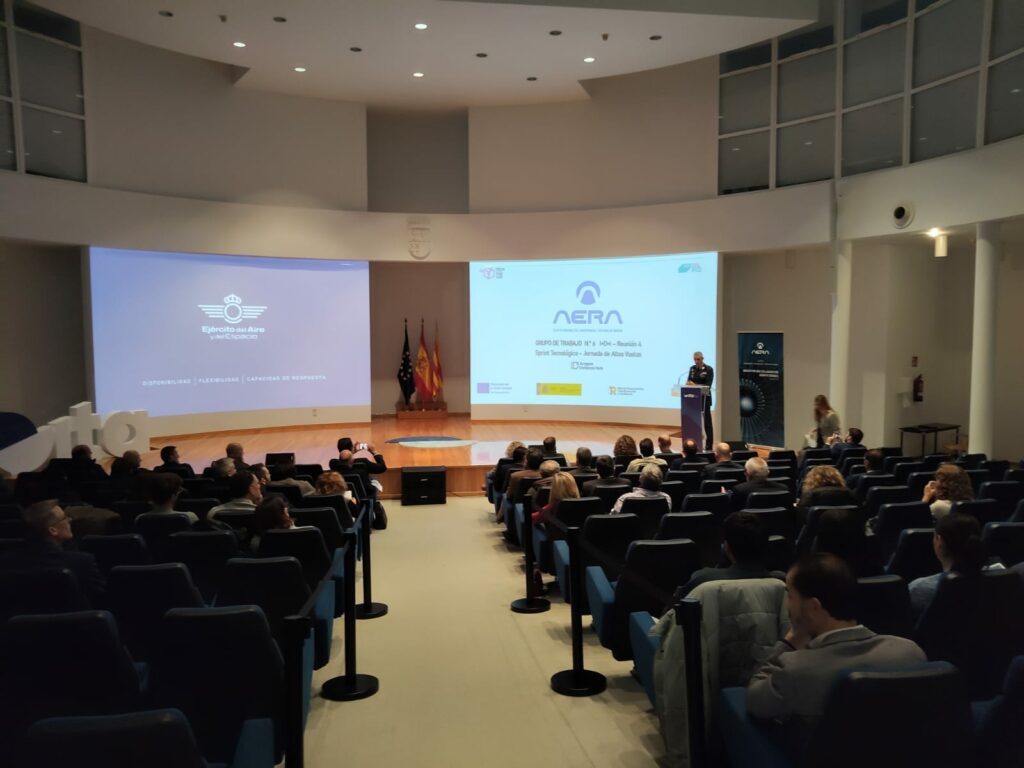
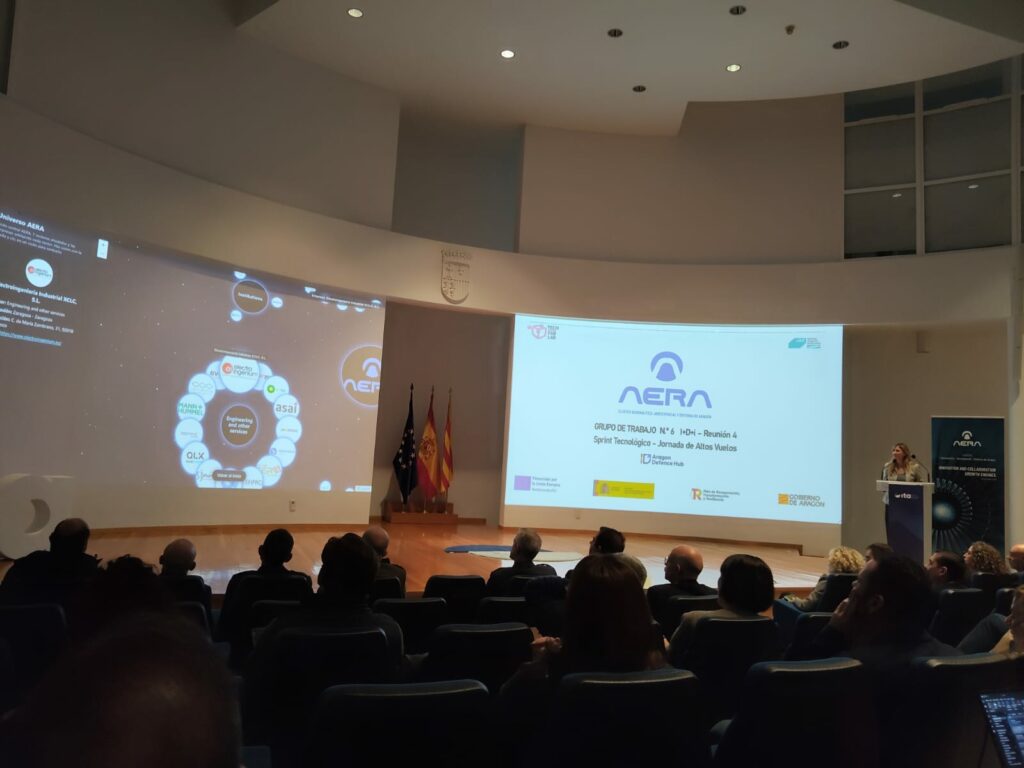
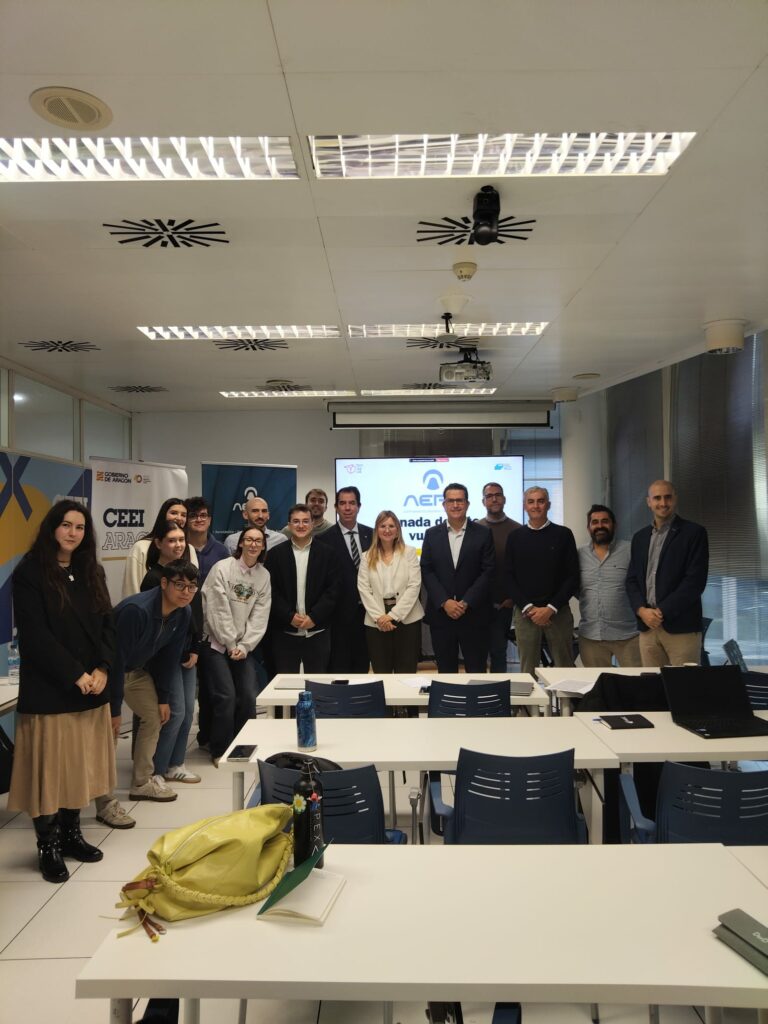
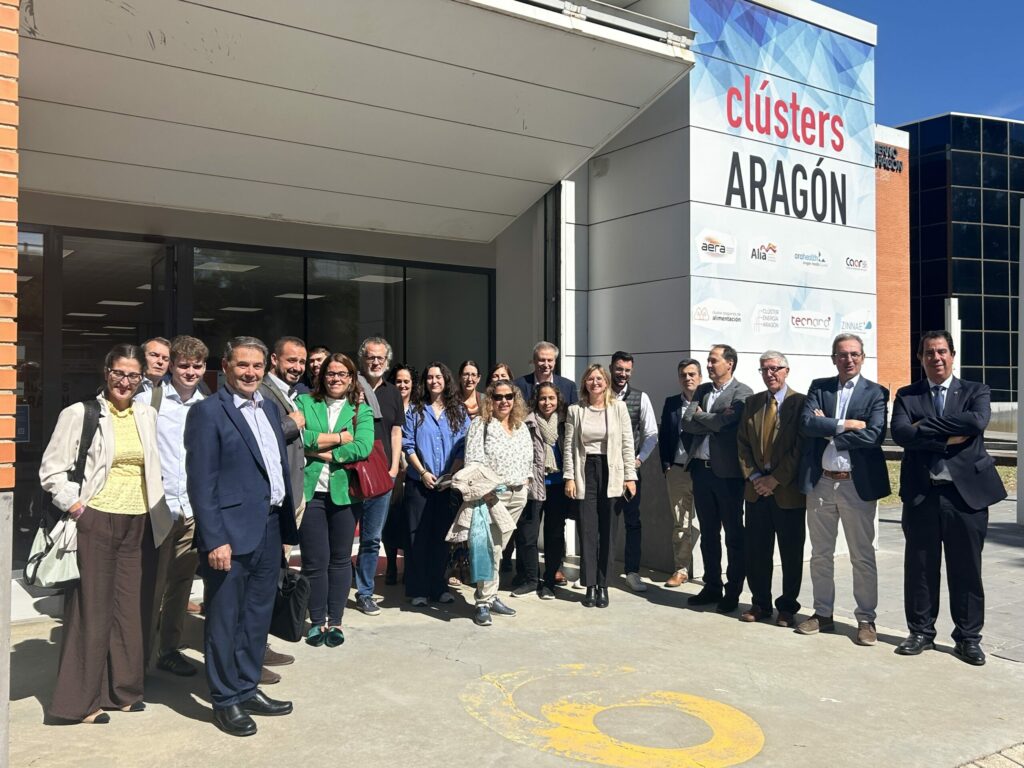
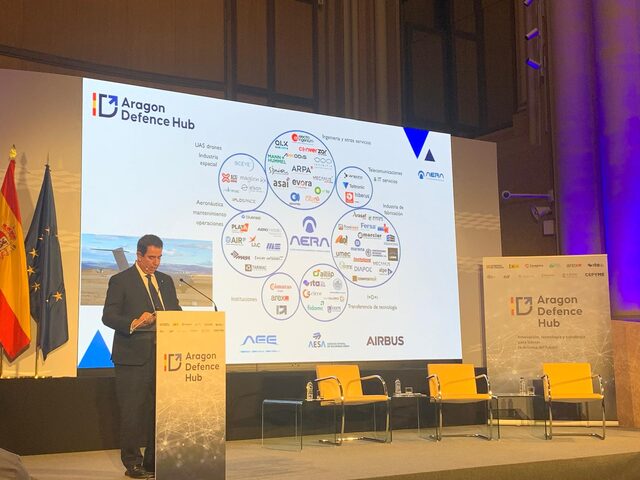
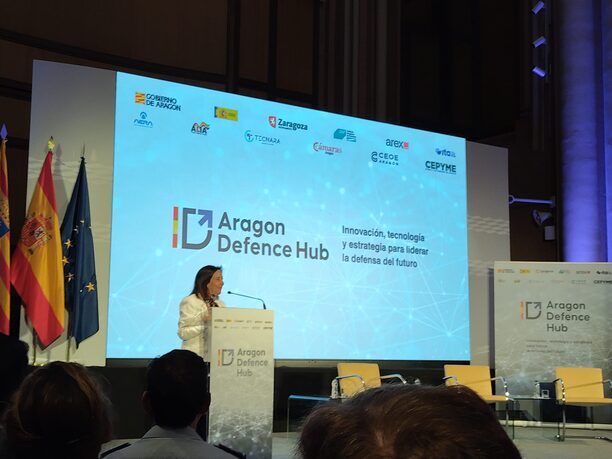
On December 15, Zaragoza hosted an event organized by AERA within the framework of the Aragón Defense Hub, bringing together representatives from the Armed Forces, institutions, and the industrial and technological ecosystem to analyze Aragón’s strategic positioning in the field of defense and dual-use technologies.
The event began with a presentation of the Zaragoza Air Base, one of the key infrastructures of the Spanish Air and Space Force, during which the Base Commander detailed its missions, operational capabilities, and strategic importance both nationally and internationally.
Next, the geopolitical and strategic context was addressed, analyzing the current international scenario and the growing need to strengthen defense capabilities, strategic autonomy, and industrial resilience. Within this framework, Aragón’s position as a strategic hub was highlighted, supported by its location, the presence of key military units, and the availability of unique infrastructures that facilitate the development of dual-use capabilities.
Subsequently, AERA was presented, highlighting the cluster’s role as a unifying force for Aragon’s aerospace, aviation, and defense ecosystem, as well as its leadership of the R&D&I Working Group within the Aragon Defense Hub.
The event concluded with a focus on the technological sector, centered on the scientific and technological landscape of defense technologies in Aragon. Key trends and priorities were presented in areas such as C4ISR, cybersecurity, unmanned and counter-drone aerial systems, Earth observation, digital MRO, and triple-use capabilities for civil, defense, and emergency applications, highlighting Aragon’s potential as a testing ground and integrator of dual-use technologies.
The meeting served as a space for reflection and connection among the various actors of the Aragon Defense Hub, strengthening collaboration between industry, government, and the Armed Forces, and laying the groundwork for the development of new strategic projects to establish Aragon as a national and European benchmark.
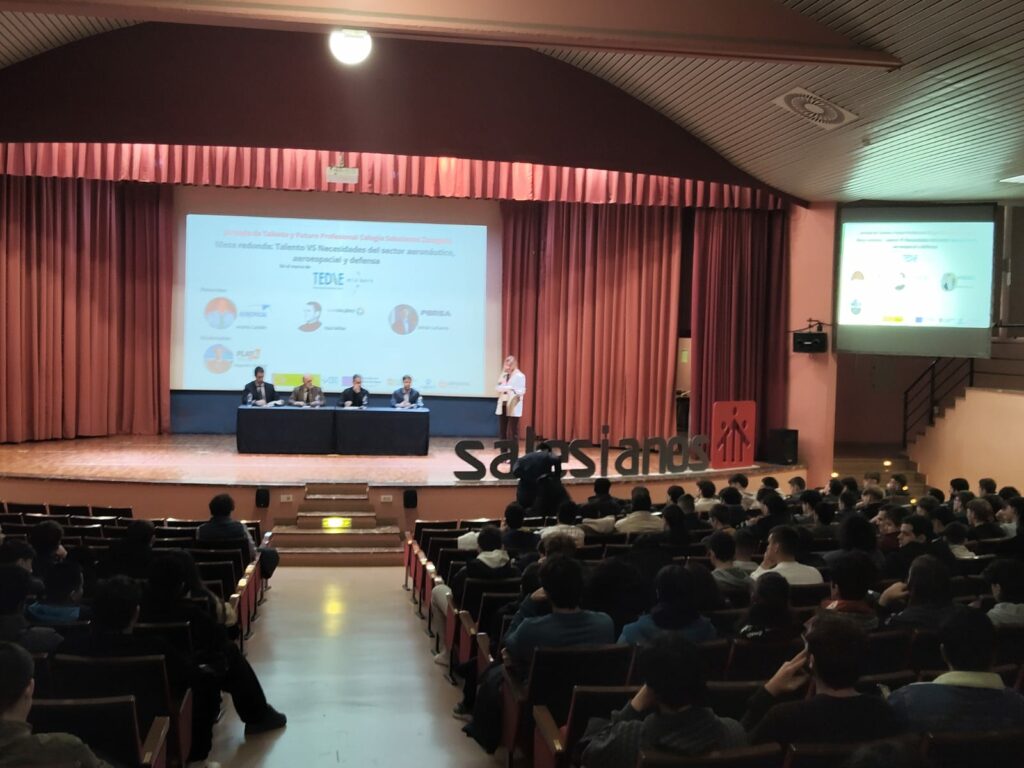
We took part in the 7th Training and Talent Day of , where students had the opportunity to learn firsthand about the opportunities and in-demand profiles in the aerospace and aeronautical sector.
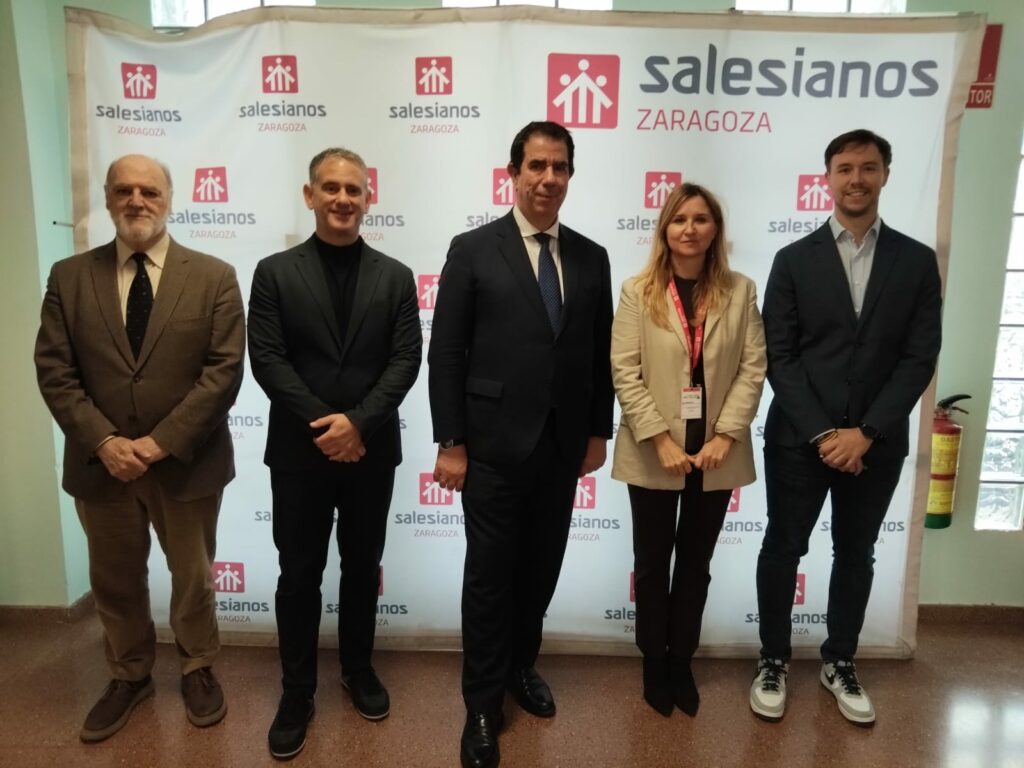
As part of the ECO-AERO project, a roundtable on people and talent was held with:
Andrés Catalán – Secretary General of PAE
Adrián Lafuente – Talent Director at the Fersa Group
Raúl Millán – Director of Companies and Institutions at Grupo San Valero
Alejandro Ibrahim – Director of Teruel Airport and President of AERA
The roundtable, titled “Talent VS Need in the aeronautical, aerospace and defence sector, highlighted innovation, sustainability and talent development as key pillars for the future of these industries.
It was an inspiring day that brought education and business closer together, promoting employability and professional growth for young people. The project’s stand, which was also part of the event, welcomed over 500 students from various intermediante and advanced programs related to the sector.
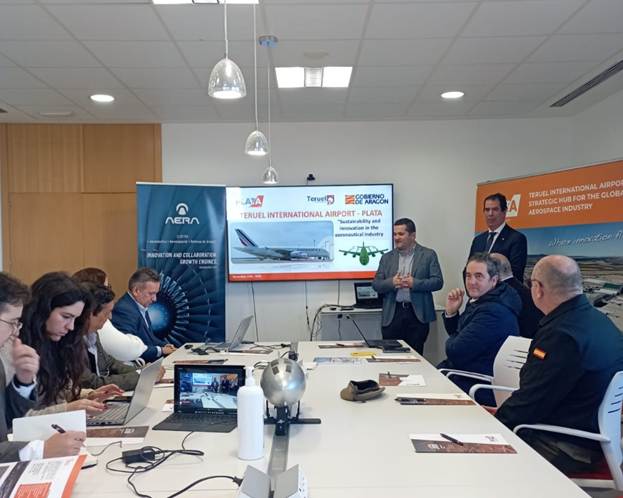
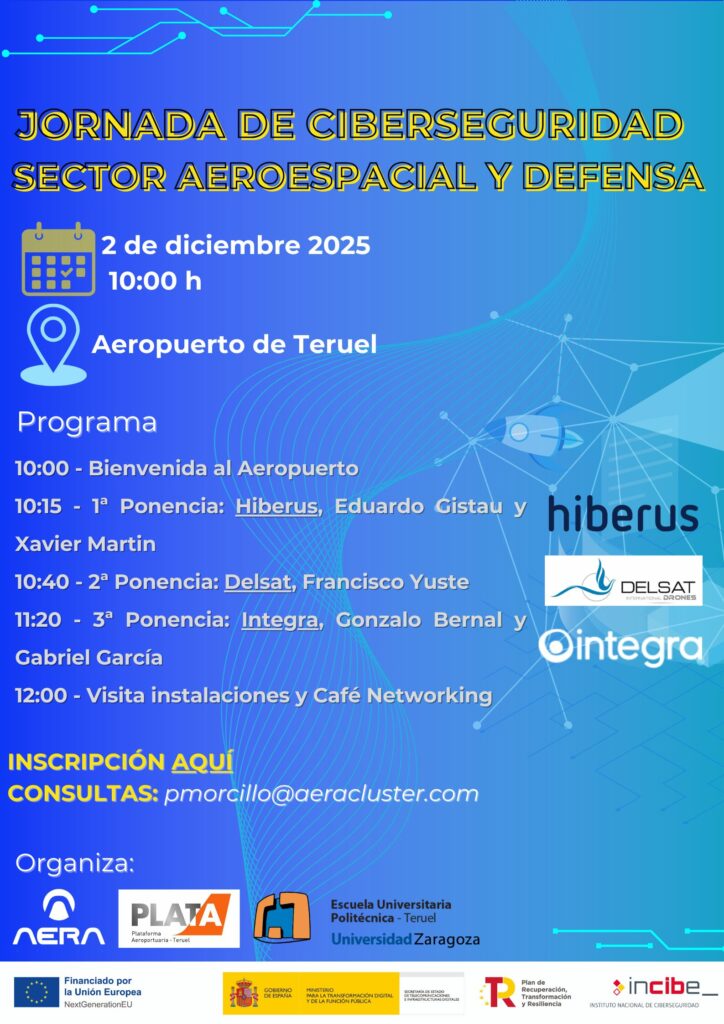
Teruel, 2 December 2025 – AERA brings together the main technological players at Teruel Airport for the Cybersecurity Conference for the Aerospace and Defence Sector.
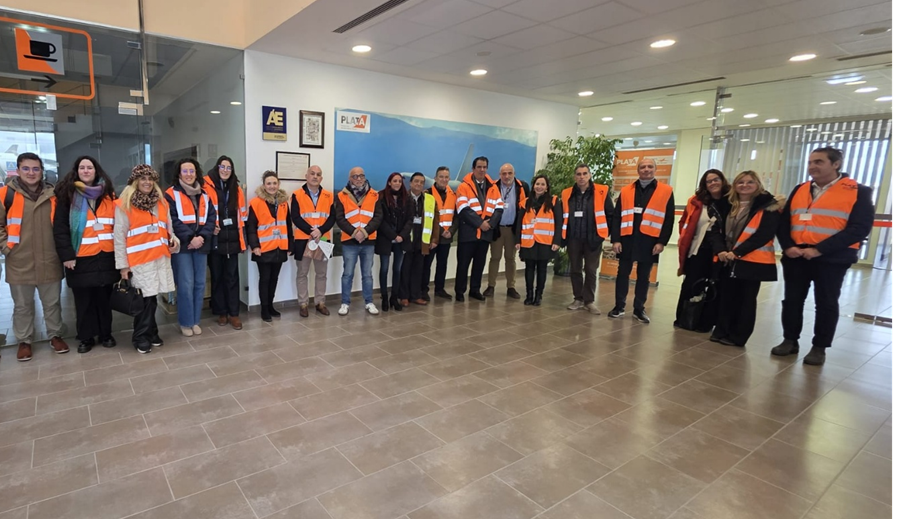
The Cybersecurity Conference for the Aerospace and Defence Sector, held on 2 December at Teruel Airport and organised by AERA, Aragón’s aeronautics, aerospace and defence cluster, in collaboration with the Polytechnic University School of Teruel and the airport itself, brought together the main technological and operational players in the ecosystem.
Jesús Gallardo welcomes participants
During the opening, Alejandro Ibrahim, Director of Teruel Airport and President of AERA, emphasised the strategic position of the airport as the province’s largest employer and reviewed the investments that are transforming the site: the construction of the new CIEMA (Comprehensive Centre for Training and Aerial Mobility), the development of an urban plan that will add one million square metres and a new runway, the future hangar for SCEYE’s HAPS operations, and the industrial project for aircraft biofuel storage, valued at €1.15 billion. Alejandro Ibrahim also highlighted other logistical uses of the airport, such as the storage of wind turbine blades and engines, and its role as an infrastructure provider for technology companies in the sector.
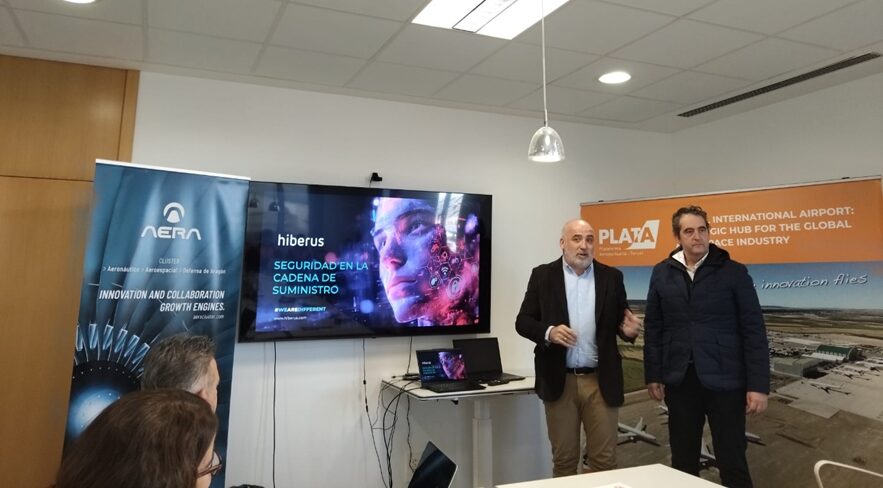
Eduardo Gistau and Xavier Martín present on supply chain security.
The technical presentations were delivered by Hiberus, Delsat and Integra. Eduardo Gistau (Global Head of Cybersecurity at Hiberus) and Xavier Martín (Director of Hiberus Catalonia) highlighted the company’s growth (over 4,000 professionals, €250 million in services, and 42 technological areas) before focusing on a clear message: the supply chain is the most vulnerable point of any organisation. They analysed the cyber incident attributed to Iberia, which in fact occurred at a supplier, and emphasised the importance of extended governance, regular audits, validation of incoming software, strict management of privileged access, and the adoption of Zero Trust Network Access. As Gistau summarised: ‘A company that does not implement cybersecurity will not only lose, but will not survive.’
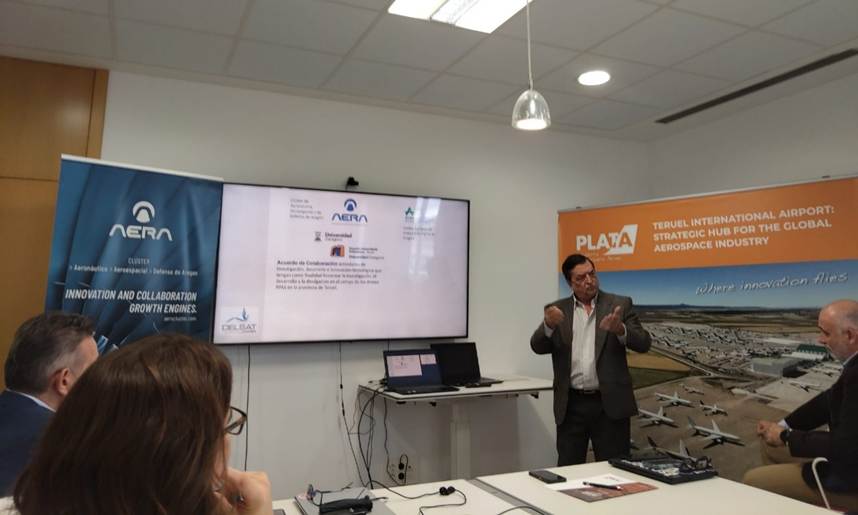
Francisco Yuste in his presentation on the DELSAT Group and telecommunications.
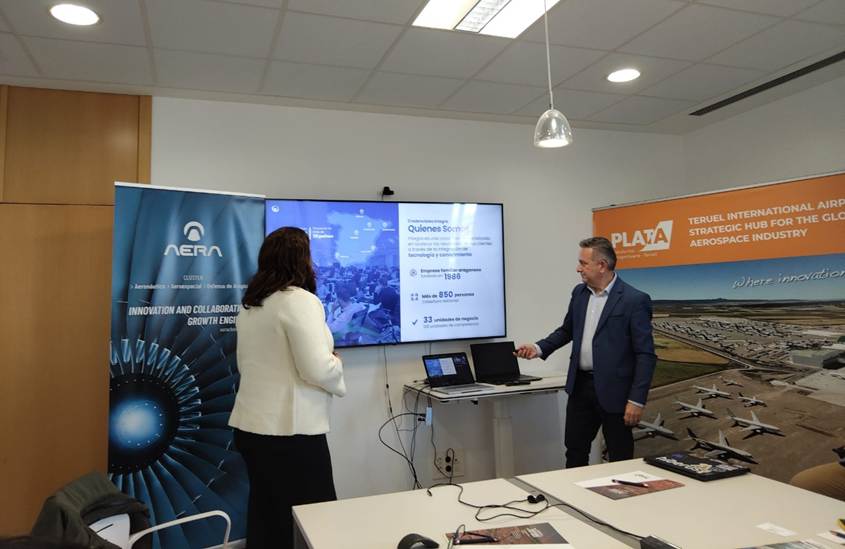
From Integra, Marisa Romero, Head of the Defence Area, and Gonzalo Bernal, Chief Technology Officer, emphasised that cybersecurity is at a critical point for the aerospace sector due to the impact of AI, which can multiply both efficiency and vulnerabilities. They warned about threats such as ransomware, OT attacks, industrial espionage, phishing, APTs, and credential theft, stressing that ‘the weakest link is us humans.’ They presented very compelling real-life examples of deepfakes, such as the ‘CEO fraud,’ and highlighted the need for audits, contingency plans, immutable backups, MFA, and network segmentation, as well as the decisive role of cyber insurance as a method of financial protection against cyberattacks. Meanwhile, Francisco Yuste presented the Delsat corporate group and its work in secure communications applied to drones and control centres, along with the various technological solutions the group develops for critical environments
“Marisa Romero and Gonzalo Bernal explain Integra’s activities and the main cybersecurity risks.”
The conference concluded with a guided tour of Teruel Airport led by Alejandro Ibrahim himself, who took the group to the IAC (International Aerospace Coatings) hangar, where the Chief Operating Officer explained the aircraft maintenance, painting, and technical management processes that position the facility as an international benchmark
The event is promoted and sponsored by the Strategic Project C077.23 on cybersecurity developed in sparsely populated areas, carried out under the agreement between INCIBE and the University of Zaragoza. The project is funded by the Recovery, Transformation and Resilience Plan, financed by the European Union (Next Generation EU), the Government of Spain’s initiative that sets the roadmap for the modernization of the Spanish economy, the recovery of economic growth and job creation, the solid, inclusive and resilient economic reconstruction after the COVID-19 crisis, and for addressing the challenges of the next decade.
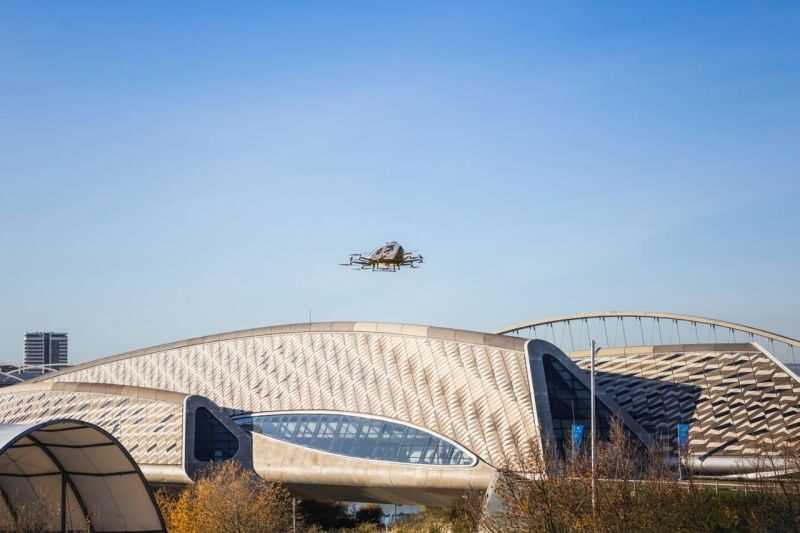
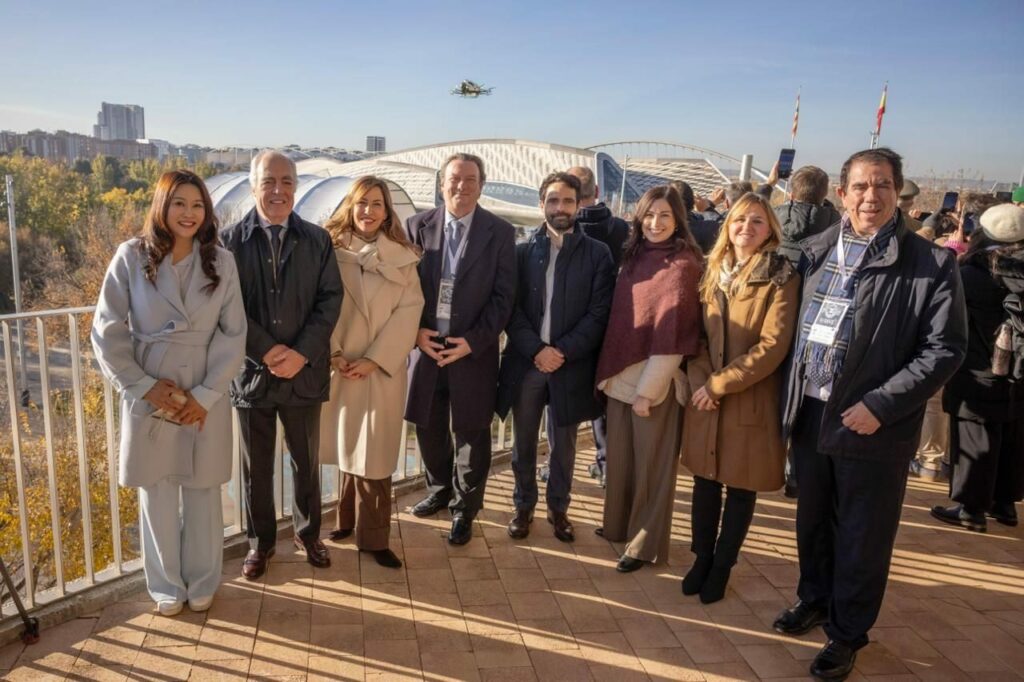
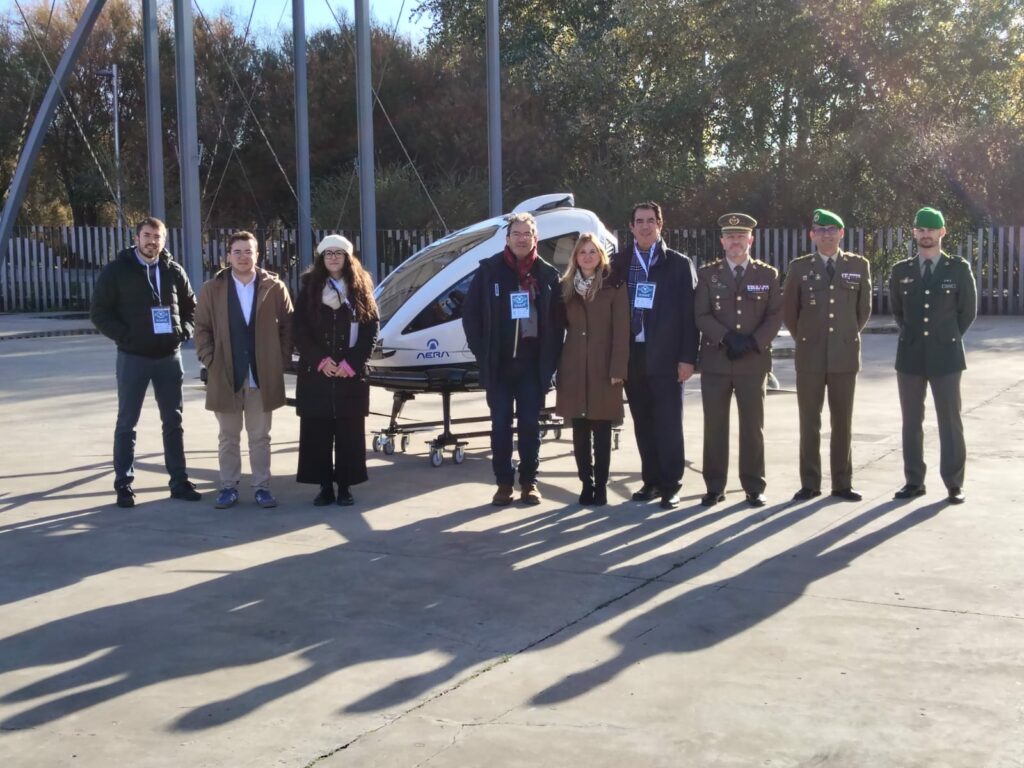
Last Monday, December 1st, the city of Zaragoza hosted the first large-scale demonstration flight in Europe using an unmanned cargo aircraft in an urban environment. The flight was carried out with the EH216 eVTOL drone from the company EHang, operated within the framework of the international project U-SAVE (Urban Supply Aerial Vehicles for Emergencies), promoted by a consortium co-led by AERA together with ALIA (the Logistics Cluster of Aragon).
The flight took place in Zaragoza’s Expo Zone, taking off from the Expo Amphitheater at around 10:00 a.m., and traveling to the Spain Pavilion. The EH216 aircraft simulated the transport of essential supplies, such as medical materials, in an emergency situation.
With this demonstration, the feasibility of using automated cargo drones for emergency, assistance, or logistics missions in congested urban environments—where traditional means may have difficulty accessing—is validated for the first time in a European urban setting.
The event marks the conclusion of the testing phase of the U-SAVE project, which has received funding from the European Union’s EIT Urban Mobility program and has involved an international consortium of specialized organizations and companies.
At AERA, we believe that this first urban flight highlights the potential of Urban Air Mobility as an efficient, sustainable, and rapid solution for the delivery of supplies in critical situations — a new dimension for resilience and emergency response in urban environments.
On December 2, from 10:00 to 12:00, a Cybersecurity Conference in the aerospace and defense sector will be held at Teruel Airport. The event is organized by the Aeronautical, Aerospace and Defense Cluster (AERA), in collaboration with the Polytechnic University of Teruel and Teruel Airport. This in-person event will bring together key players in the sector to discuss challenges and solutions in cybersecurity.
Participating companies will include INTEGRA, HIBERUS, and DELSAT, which will share their experience and best practices in a unique environment for learning and networking.
An opportunity to update knowledge, build strategic connections, and discover how to protect critical infrastructure in the aerospace and logistics sectors.
The event is promoted and sponsored by the Strategic Project C077.23 on cybersecurity developed in sparsely populated areas, carried out under the agreement between INCIBE and the University of Zaragoza. The project is funded by the Recovery, Transformation and Resilience Plan, financed by the European Union (Next Generation EU), the Government of Spain’s initiative that sets the roadmap for the modernization of the Spanish economy, the recovery of economic growth and job creation, the solid, inclusive and resilient economic reconstruction after the COVID-19 crisis, and for addressing the challenges of the next decade.
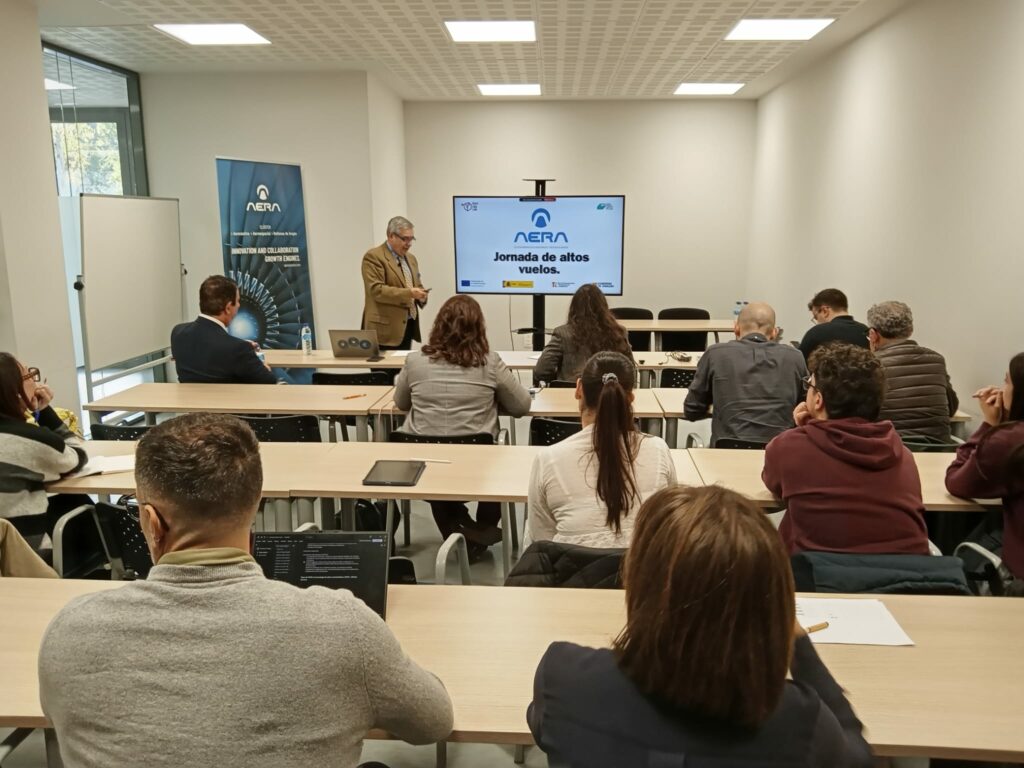
AERA hosted the High-Flying Day at its facilities on 18 and 20 November, an initiative promoted in collaboration with the Aragonese Institute of Development (IAF) to provide Aragonese startups and SMEs with practical knowledge, strategic contacts, and real opportunities to enter the aerospace and aeronautical sector value chain. Speakers included: – Alejandro Ibrahim (Teruel Airport): overview of the sector, strategic infrastructures, and Aragón’s role as an aeronautical hub. – Alfredo Serrano (SCEYE): types of HAPS and stratospheric technologies. – Miriam Royo (Elson Space): next-generation HAPS and drones. – José Moliner (TARMAC): innovation in materials and sustainable production processes. – Ignacio Miguelena (MECANUS Innovación): anti-drone positioning systems. – Jose Ángel Fernández (FIDAMC): innovative processes and success stories in advanced materials recycling. – Cristina Crespo and Carlos Peribáñez (ITA): sustainability, trends, and the future of materials. – Pascual Gracia (AITIIP): high-precision machining and applications for the aerospace sector – Pedro Lama (AIR): tecnologías de reciclaje aplicadas a aeronáutica y espacio. We continue with the High-Flying Day and Networking Lunch on 15 December.
The European Aerospace Cluster Partnership (EACP) is a European network that brings together more than 45 aeronautical and aerospace clusters from 18 countries. Its aim is to strengthen the competitiveness of the European aerospace sector through cooperation, knowledge exchange, and the development of collaborative projects in innovation, sustainability, and training. The EACP network represents more than 5,000 companies and technology centers, employing over 450,000 people across Europe.
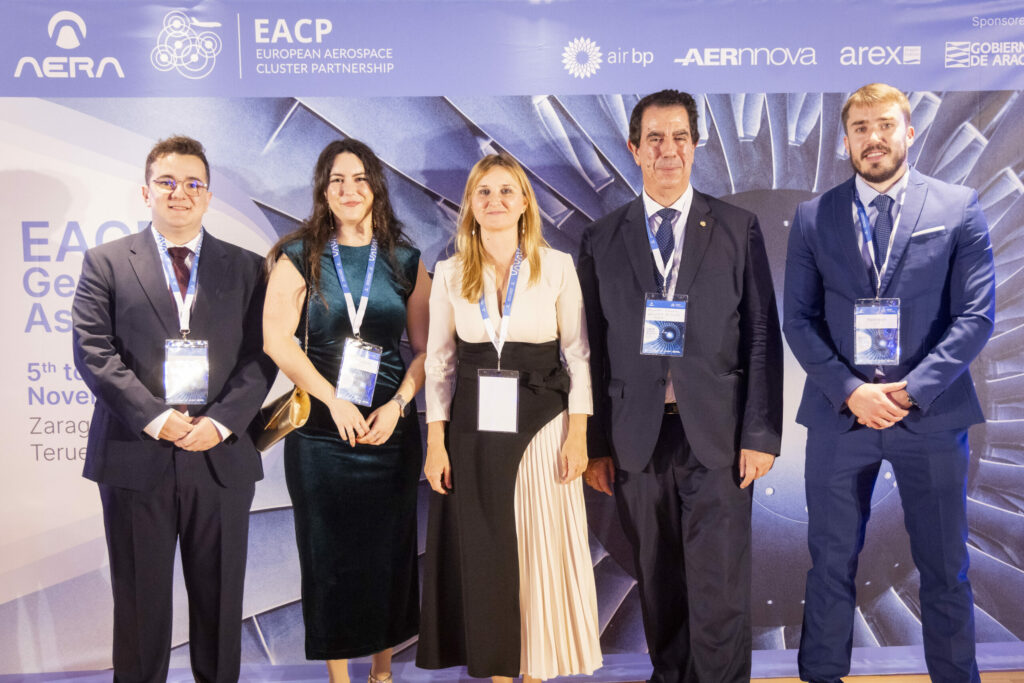
The EACP General Assembly in 2025 took place in Zaragoza (Spain) on November 5 and 6, 2025. It was organized by the Aeronautical, Aerospace and Defense Cluster of Aragón (AERA), with the special collaboration of Teruel Airport.
Over these days, we have had the opportunity to share ideas, projects, and future visions with more than 200 representatives of clusters, companies, institutions and authorities from 18 countries, strengthening the bonds of collaboration that make the EACP the most dynamic and active network in the European aerospace sector.
The institutional dinner held in Zaragoza on 5th November, provided the perfect setting to acknowledge the trajectory and dedication of those driving the growth of the sector in Aragón:
Sallén Aviación, for its excellence in aeronautics.
AITIIP Technology Centre, for its excellence in technological development and aeronautical innovation.
Airbus Spain, for its leadership and contribution to the advancement of the European aerospace sector.
Mar Vaquero, Vice-President and Minister of the Presidency, Economy and Justice of the Government of Aragon, for her drive and commitment to aeronautical, aerospace, and defence technologies.
On November 6th, we travelled to the Teruel Airport to visit its facilities and the operations of companies such as TARMAC Aragón, BP, and International Aerospace Coatings (IAC). This technical visit showcased Teruel’s enormous potential as a European benchmark platform for innovation, sustainability, and aerospace industry development.
We would like to thank our collaborating partners for their support: the Government of Aragón, Aragón Exterior (AREX), Aernnova, BP, the Teruel Airport, and all AERA member companies who made this edition possible.
Media Coverage
Zaragoza se convierte en el epicentro de la innovación aeroespacial europea – Aragón Hoy
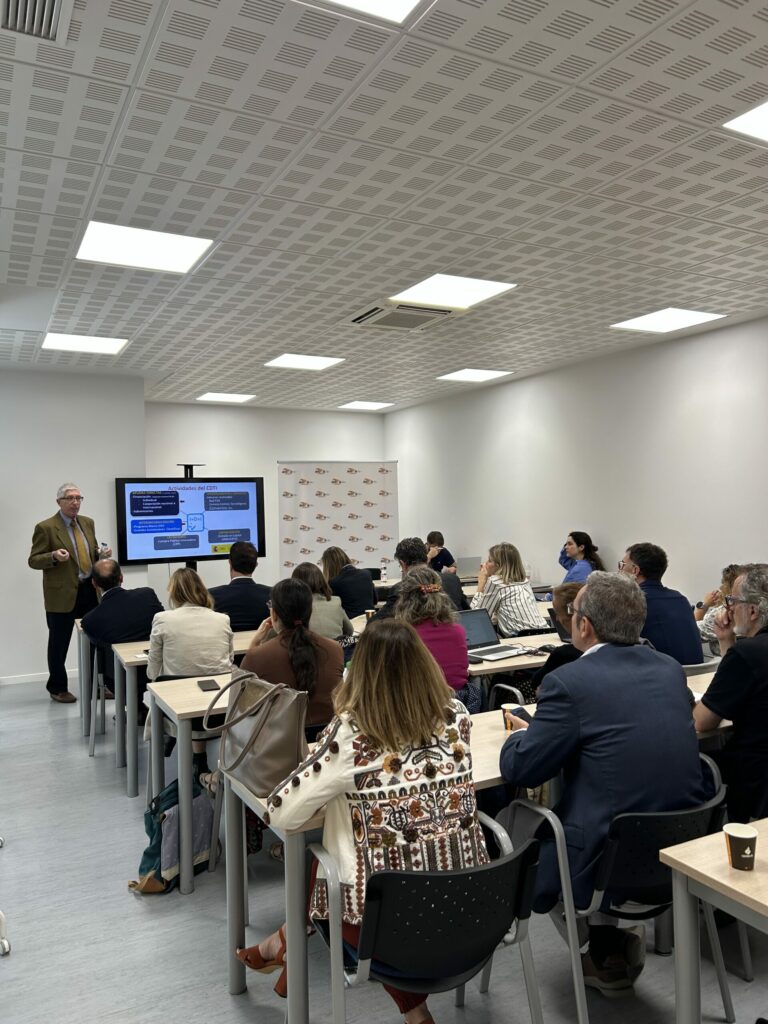
On September 25, an important conference for the aerospace and defense sector was held, organized by the AERA Cluster in collaboration with the Centre for the Development of Technology and Innovation (CDTI) and the Government of Aragón. During the event, the Government of Aragón presented its initiatives in the field of defense and dual-use technologies, while the CDTI—through its Innovation Policy Directorate—addressed three main areas: • CDTI funding programs for dual-use technologies. • Calls for Cluster 3 “Civil Security for Society.” • Calls for Cluster 5 – Destination 5 (Aviation) under Horizon Europe.
• Calls for Cluster 3 “Civil Security for Society.”
• Calls for Cluster 5 – Destination 5 (Aviation) under Horizon Europe. In addition, participating entities had the opportunity to hold bilateral meetings with CDTI representatives, providing a space to present project ideas and explore pathways for direct collaboration.
On September 10th, the official presentation of the Aragon Defense Hub took place in Zaragoza, a project in which AERA is actively involved, leading the R&D&I Working Group to boost innovation and technological development in the defense sector in Aragon. During the event, the president of AERA and director of Teruel Airport, Alejandro Ibrahim, emphasized the importance of Aragon’s technological capabilities as a driver of progress and highlighted the role of the cluster in consolidating Aragon as a benchmark in aeronautics, space, and defense.
La presentación contó con la presencia de la ministra de Defensa, Margarita Robles, quien señaló la importancia de este hub como una inversión en el futuro, con capacidad para generar empleo cualificado, atraer talento y fortalecer la cohesión territorial. Entre las iniciativas destacadas se encuentran la creación del Centro Integral de Entrenamiento y Movilidad Aérea (CIEMA), en el Aeropuerto de Teruel, con una inversión de 42 millones de euros, así como el impulso a proyectos vinculados a los sistemas de vuelo estratosférico (HAPS) con 40 millones de euros adicionales. Con esta implicación, AERA y sus socios consolidan su compromiso con el desarrollo industrial y tecnológico de Aragón, contribuyendo a que el Hub de Defensa se convierta en un motor de progreso económico y social.
The Aeronautical Industry of Aragon and Its Expanding Potential
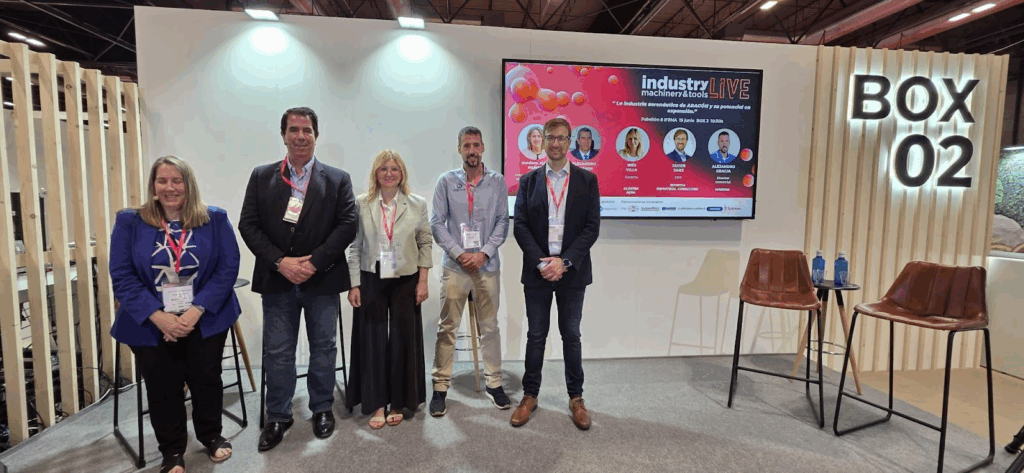
Zaragoza, Thursday, June 19, 2025 – The region of Aragon was in the spotlight this Thursday, June 19, at Industry Live, one of the most important national events for the exchange of knowledge and experiences in innovation, industry, and technological transformation.
Under the title “The Aeronautical Industry of Aragon and Its Expanding Potential”, the presentation focused on the Aragonese aeronautical ecosystem, addressing the current challenges faced by companies as well as the solutions being promoted from within the region to foster competitiveness, sustainability, and adaptability.
Mar Paños, Director of Industrial Promotion and Innovation of the Government of Aragon, opened the session by highlighting the region’s industrial, business, and technological capabilities, as well as its innovative ecosystem and the regional government’s support programs for companies seeking to invest and/or grow in the region.
Alejandro Ibrahim, Director of Teruel Airport, shared the experience of the airport in Teruel, which has evolved from a pioneering project at its inception to becoming an aeronautical industrial hub, with activities as diverse as long-term aircraft parking, maintenance engineering, and aircraft recycling and dismantling at the end of their life cycle.
Inés Villa, AERA Cluster Manager, explained the functioning of Aragonese clusters as engines of innovation. In her presentation, she emphasized the relevance of the aerospace, defense, and security sectors, and cited projects such as HYDUAR, focused on hydrogen mobility, and U-SAVE, centered on aerial systems for emergencies, demonstrating the coordination capacity of the regional ecosystem.The panel concluded with interventions from two representative companies of the Aragonese ecosystem. Javier Sanz, CEO of INFINITIA Industrial Consulting, explained how they apply forensic engineering and advanced materials analysis to solve critical issues. Meanwhile, Alejandro Gracia, Commercial Director of MARENA, showed how innovation, CNC technology, and continuous improvement are key elements to ensure reliable results.