The Aragonese Aerospace and Defence Cluster (AERA) continues to work on the development of the Cross-Border Capabilities Catalogue for the aeronautics, space and defence industries, one of the initiatives under the European FRAMES project, funded through the Interreg POCTEFA programme.
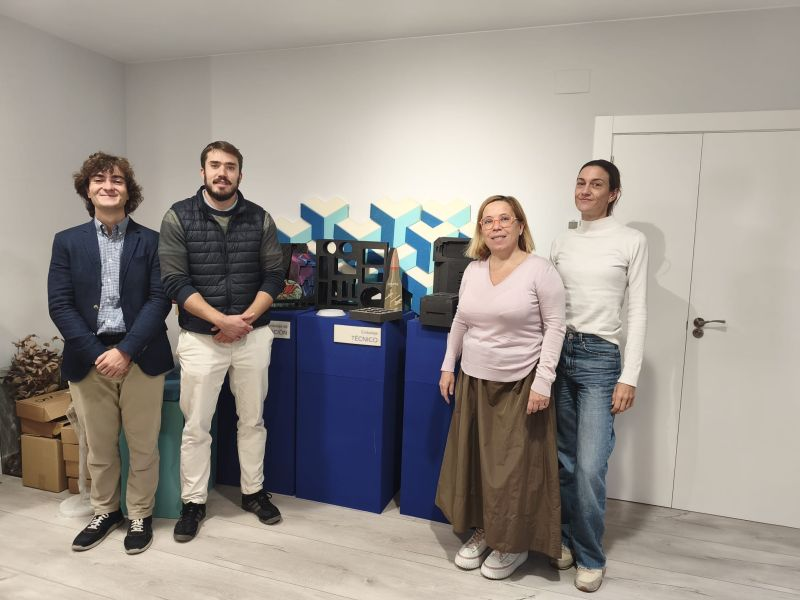
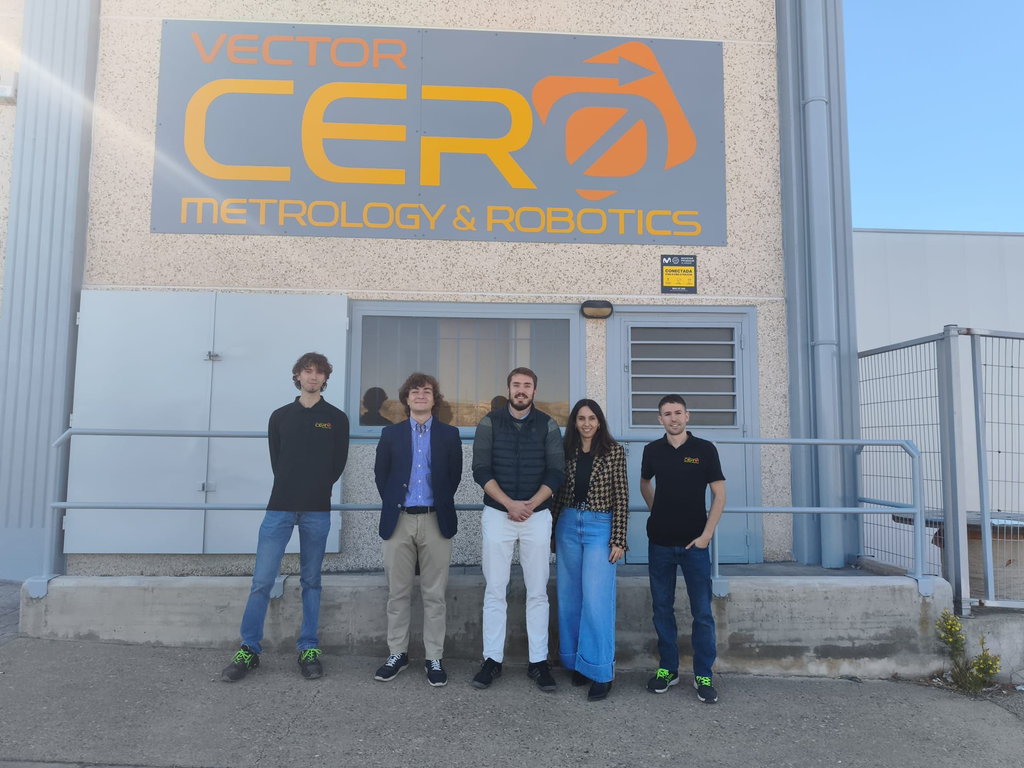
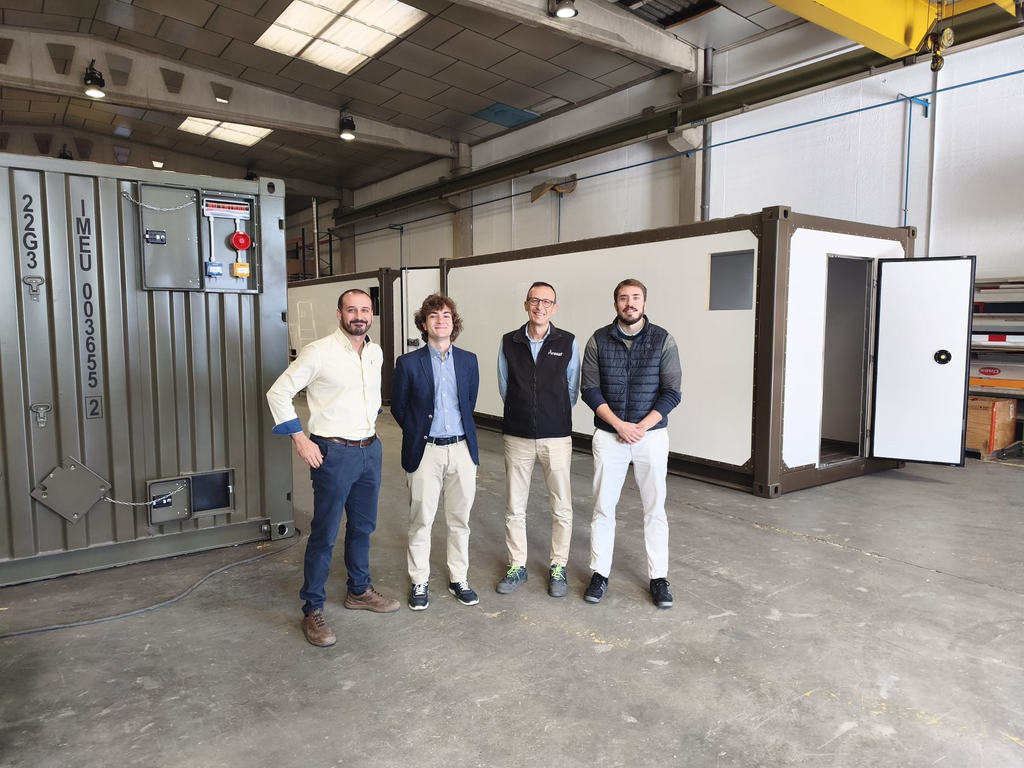
Within this framework, AERA has visited the facilities of three of its member companies: DIAPOL, Vector 0 Metrología and Arasaf, to gain first-hand insight into their activities, technological and industrial capabilities, and main areas of specialisation.
The visits identified complementary capabilities across different areas of the industry:
DIAPOL specialises in the precision cutting and processing of polyurethane and polyethylene foams for a wide range of industrial applications, including the aeronautics, defence and automotive sectors.
Vector 0 Metrología operates in the field of industrial metrology, dimensional inspection, the design and manufacture of inspection fixtures, 3D scanning and reverse engineering, with key applications in the aeronautics and automotive sectors.
Arasaf is an industrial company specialising in sheet metal processing. Its capabilities include laser and plasma cutting, bending, welding, painting and assembly, as well as the development of solutions for sectors such as HVAC and defence.
These visits are part of the ongoing work to identify, collect and document the capabilities of companies that will be included in the FRAMES Cross-Border Capabilities Catalogue. This tool will help showcase the industrial ecosystems of Spain and France, foster mutual understanding between companies, and help identify new opportunities for collaboration and the development of joint projects.
About the FRAMES Project
FRAMES is a European project led by AERA, in collaboration with HEGAN, Aerospace Valley and CCI Occitanie, aimed at strengthening cooperation and enhancing the resilience of the aeronautics and space industries across the cross-border region between Spain and France.
The project is co-funded at 65% by the European Union through the Interreg VI-A Spain-France-Andorra (POCTEFA 2021–2027) programme.
The Aragonese Aeronautics, Aerospace and Defence Cluster (AERA) and Fundación Hidrógeno Aragón (FHa) have completed the HIDROSIN-AR project, Hydrogen and Synthetic Fuels for the Decarbonisation of Strategic Sectors in Aragón. The initiative was funded by the Aragonese Development Institute (IAF) under the 2026 call for grants supporting Innovative Business Associations (AEIs) in the implementation of collaborative projects.
The project builds on the joint work previously carried out by both organisations on hydrogen applications, incorporating on this occasion a specific analysis of synthetic fuels, with a particular focus on Sustainable Aviation Fuels (SAF) and synthetic aviation fuels (e-SAF).
The study combines technical and documentary research with a consultation of Aragón’s business community, the identification of funding opportunities, and knowledge transfer and dissemination activities. Its findings provide an overall picture of the potential of these technologies and the main factors influencing their implementation.
The Aeronautics Sector and the Teruel Airport Ecosystem Among the Main Opportunities
One of the study’s priority areas is the decarbonisation of air transport through the use of sustainable fuels. In particular, e-SAF, produced from renewable hydrogen and carbon sources, represents a promising alternative for reducing dependence on fossil fuels in a sector where direct electrification faces significant limitations.
The analysis identifies opportunities for Aragón across different stages of this value chain, from renewable hydrogen production and CO₂ conditioning to engineering, process integration and fuel logistics.
In this context, the Teruel Airport area has been identified as a potential location for exploring future pilot initiatives and technology demonstrators related to the reception, storage, traceability and supply of sustainable aviation fuels, as well as their use in aeronautical activities. The feasibility of these applications will depend on fuel availability, the necessary infrastructure and the operational needs of the sector.
The study also assesses the resources required for a hypothetical production scenario of 100,000 tonnes of e-SAF per year. Based on the assumptions analysed, this scenario would require between 63,000 and 92,000 tonnes of hydrogen annually, between 0.41 and 0.62 million tonnes of CO₂, and between 3.4 and 5.7 TWh of electricity per year. These estimates help illustrate the scale of resources required for production at this level and the challenges associated with its industrial feasibility.
<br/>Industrial Applications and Dual-Use Technologies
HIDROSIN-AR also analyses the potential of renewable hydrogen and its derivatives in industrial applications and dual-use technologies, with potential uses in both civilian and defence sectors.
In the latter area, the study identifies opportunities related to energy autonomy, storage, autonomous power generation and infrastructure resilience. It also highlights the potential for collaboration between companies in the energy, industrial, technology and defence sectors to develop solutions suited to demanding environments.
Aragón cuenta con una base favorable para explorar estas oportunidades gracias a sus recursos renovables, su actividad industrial y sus capacidades científico-tecnológicas. No obstante, el desarrollo de nuevas aplicaciones requiere evaluar la disponibilidad efectiva de los recursos, las condiciones de suministro, los costes y las necesidades específicas de cada aplicación.
Aragón has a favourable foundation for exploring these opportunities, thanks to its renewable energy resources, industrial activity and scientific and technological capabilities. However, the development of new applications requires an assessment of the actual availability of resources, supply conditions, costs and the specific requirements of each application.
Key findings include the strong interest in research, development and innovation (R&D&I), highlighted by 12 of the 17 participating organisations. Opportunities have also been identified in pilot projects, technology demonstrators, new products and services, and business collaboration consortia.<br/>On the other hand, the main barriers identified include the lack of storage, transport and supply infrastructure, the costs associated with these technologies, and their current level of maturity. The organisations consulted also highlighted the need to facilitate the search for technological and industrial partners, access to funding, and the preparation of collaborative project proposals.
Knowledge Transfer
As part of HIDROSIN-AR, 24 dissemination activities have been carried out, five knowledge transfer activities have been held, and the situation and level of interest of 17 organisations in renewable hydrogen and synthetic fuels have been analysed.<br/>The project has also assessed opportunities related to SAF and sustainable aviation fuels at Teruel Airport, identifying potential areas of action for Aragón.
The conclusions of HIDROSIN-AR indicate that Aragón has relevant capabilities and resources to contribute to the development of renewable hydrogen and synthetic fuel value chains. However, establishing these value chains will require progress in the economic viability of solutions, access to infrastructure, the availability of raw materials and renewable energy, and the identification of applications with potential demand.
In this regard, the project provides a technical basis for guiding future collaborative initiatives, identifying funding opportunities, and exploring pilot projects and technology demonstrators, particularly in the industrial, aeronautics and dual-use technology sectors.
With the completion of HIDROSIN-AR, AERA and Fundación Hidrógeno Aragón strengthen their collaboration to identify innovation opportunities and contribute to the development of new energy and industrial solutions in Aragón, fostering cooperation between companies and technology stakeholders and supporting the decarbonisation of strategic sectors.
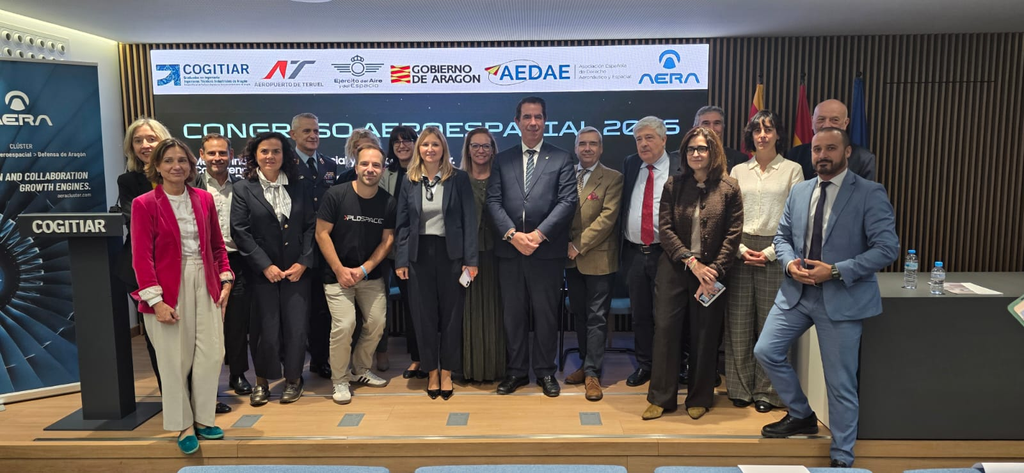
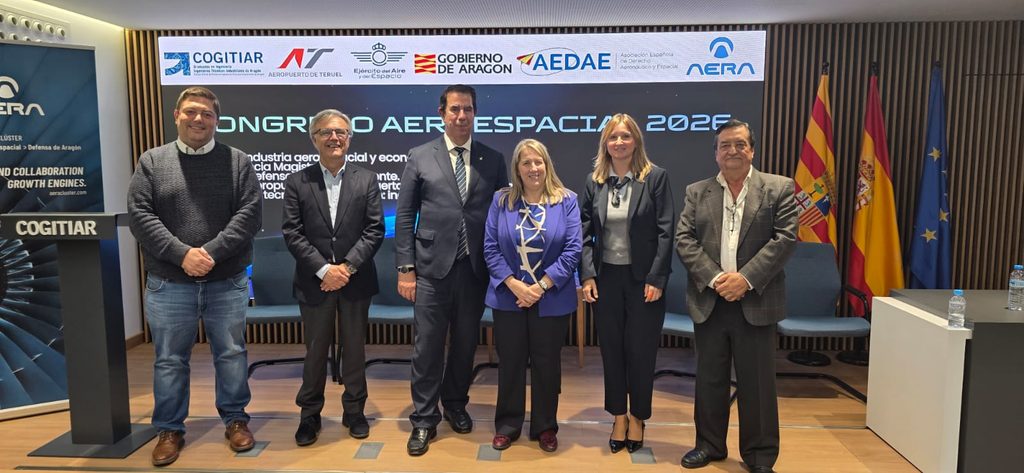
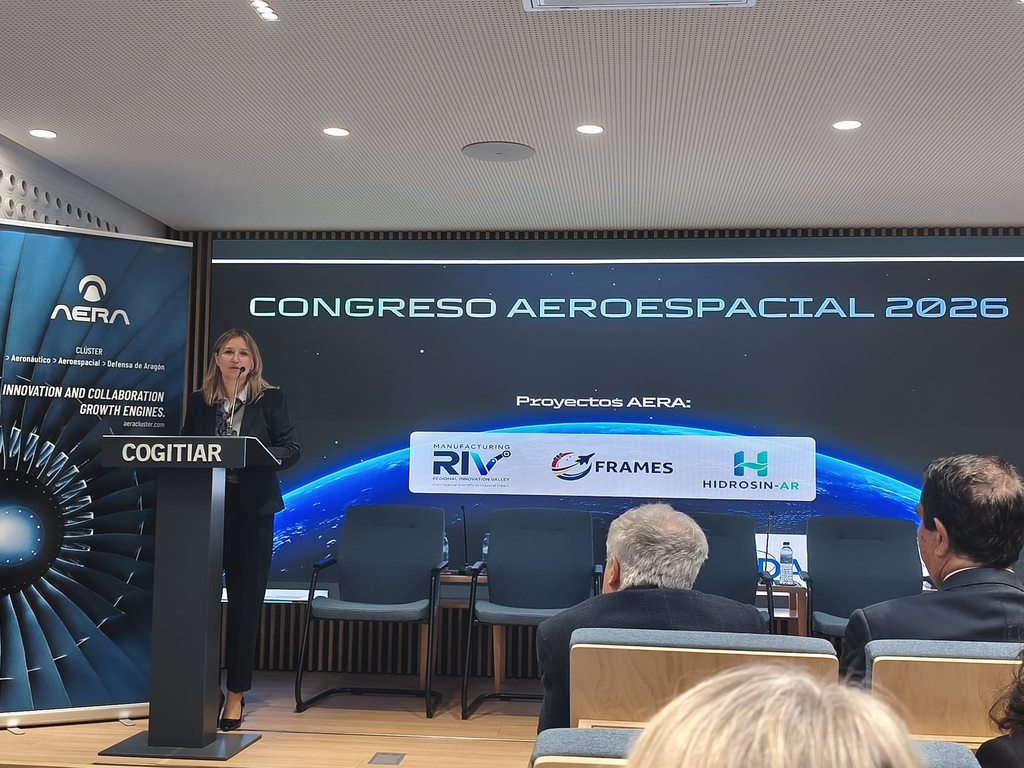
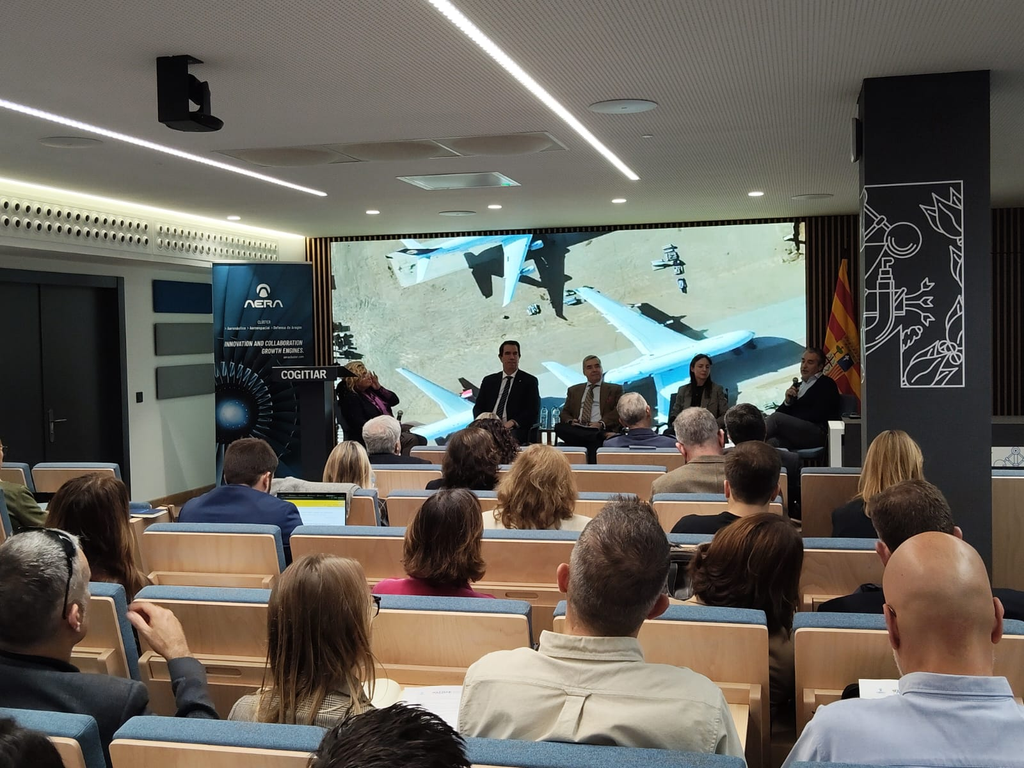
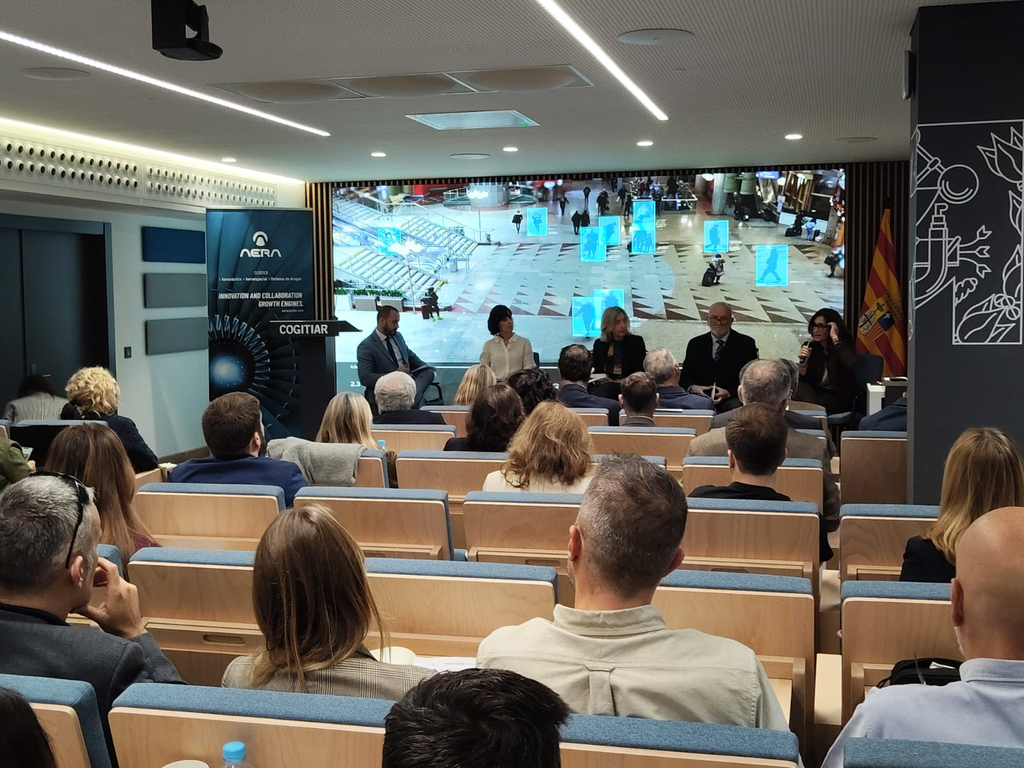
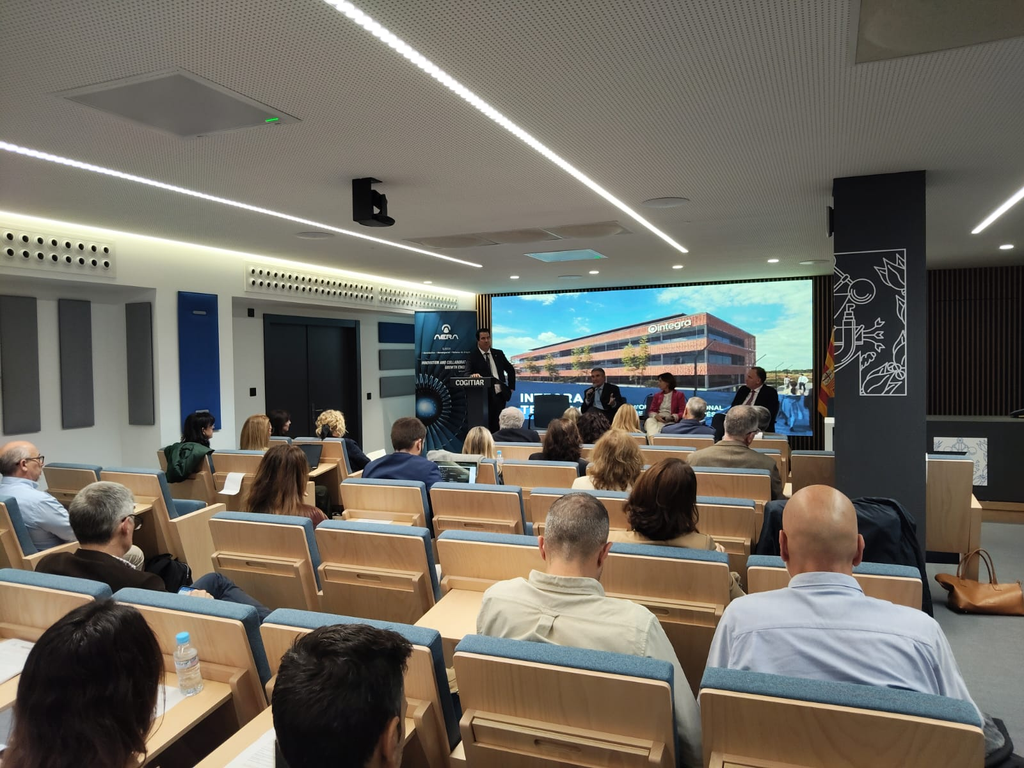
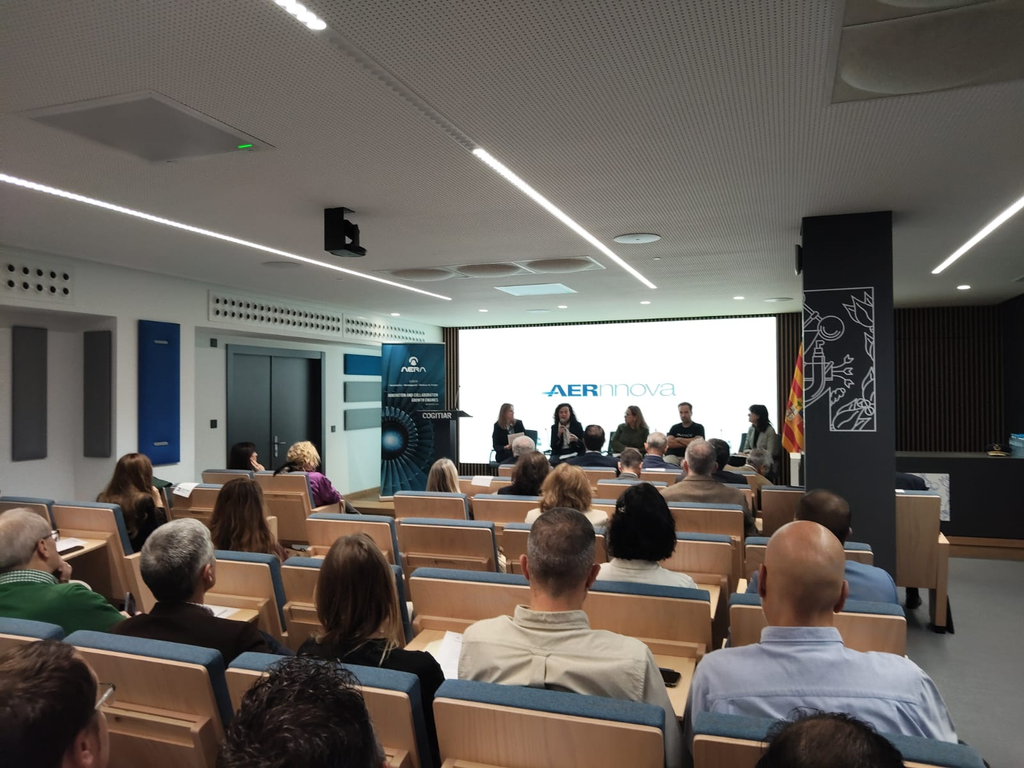
The 2026 Aerospace Congress, organised in collaboration with AEDAE, addressed key challenges in the areas of the circular economy, defence capabilities, airport infrastructure and emerging technologies, with significant participation from AERA member companies.
The Aragonese Aeronautics, Aerospace and Defence Cluster (AERA) and the Spanish Association of Aeronautical and Space Law (AEDAE) held the 2026 Aerospace Congress in Zaragoza on 22 October. The event brought together institutional representatives, companies and technology centres to discuss the sector’s main challenges and opportunities.
The event, held at COGITIAR’s headquarters, featured four panel discussions and a keynote address, focusing on industrial sustainability, defence, airport infrastructure and technological innovation.
The first panel, “Aerospace Industry and the Circular Economy”, moderated by Inés Villa, AERA’s General Manager, featured contributions from Aernnova, AITIIP, PLD Space and MAPFRE. The discussion focused on the evolution of materials, advanced manufacturing processes and the sustainability challenges facing the aerospace industry.
The event also featured a keynote address by Javier Rodríguez, Spanish Delegate for Space Affairs to the European Union and the European Space Agency (ESA), focusing on the European space landscape.
The second panel, “Defence and the Environment”, moderated by Francisco Martín from the Aragonese Development Institute (IAF) and associated with the Aragón Defence Hub, brought together the University Defence Centre, Airbus, HISDESAT and Teltronic. Participants discussed the relationship between sustainability, environmental regulations, technological capabilities and critical communications in the defence sector.
The third panel, “Airports and Stratoports: Management and Sustainability”, moderated by Elisa González Ferreiro, President of AEDAE, focused on the evolution of airport infrastructure and the development of new aerospace activities. Featuring contributions from Teruel Airport, SCEYE, AIR and professionals from the airport sector, the discussion explored opportunities related to sustainable management and HAPS (High Altitude Pseudo-Satellites) platforms.
The final panel, “Technology in Aragón: Industry and New Capabilities”, moderated by Alejandro Ibrahim, President of AERA and Managing Director of Teruel Airport, brought together the Aragonese Institute of Technology (ITA), Equimodal and INTEGRA Tecnología, alongside professionals from the space sector. The discussion highlighted Aragón’s technological capabilities in research, industrial solutions, digitalisation and the development of new applications.
AERA: Business Cooperation and Applied Innovation
The congress also provided an opportunity to highlight AERA’s role in driving collaborative projects that connect companies with new technological and industrial opportunities.
One of these initiatives is HIDROSIN-AR, developed by AERA in collaboration with Fundación Hidrógeno Aragón and funded by the Aragonese Development Institute (IAF). The project examines the opportunities and limitations of renewable hydrogen and synthetic fuels in aeronautical and defence applications, assessing their potential to contribute to the decarbonisation of the sector, as well as the energy, technological and industrial requirements associated with their implementation. As part of this initiative, AERA is also promoting business engagement through a survey aimed at identifying industrial capabilities, areas of interest and opportunities for collaboration.
These initiatives are complemented by FRAMES, a European project aimed at strengthening the resilience of the aerospace supply chain across Aragón, the Basque Country and Occitanie, and QUANTICOAT, VERTIMAS, INSPECTIA and skAIrisk, four projects led by AERA and included in the provisional resolution of the grant scheme for Innovative Business Associations (AEIs), all aimed at enhancing companies’ technological capabilities.
These initiatives reflect the cluster’s commitment to business cooperation, applied innovation and the development of solutions that address the challenges facing the aeronautics, aerospace and defence industries.
The official opening ceremony was attended by Enrique Zaro, Dean of COGITIAR; Alejandro Ibrahim Perera, President of AERA; Elisa González Ferreiro, President of AEDAE; Brigadier General Luis Alberto Martínez Ruiz, Commander of Zaragoza Air Base; and Octavio López Rodríguez, representing the Government of Aragón.
AERA would like to thank AEDAE, COGITIAR, the participating institutions, speakers, moderators and attendees for their cooperation, with special thanks to the member companies that shared their knowledge and experience.
The event reinforces AERA’s commitment to fostering cooperation between companies, technology centres and institutions in order to strengthen Aragón’s industrial base, create new business opportunities and consolidate the region’s position in the aeronautics, aerospace and defence sectors.
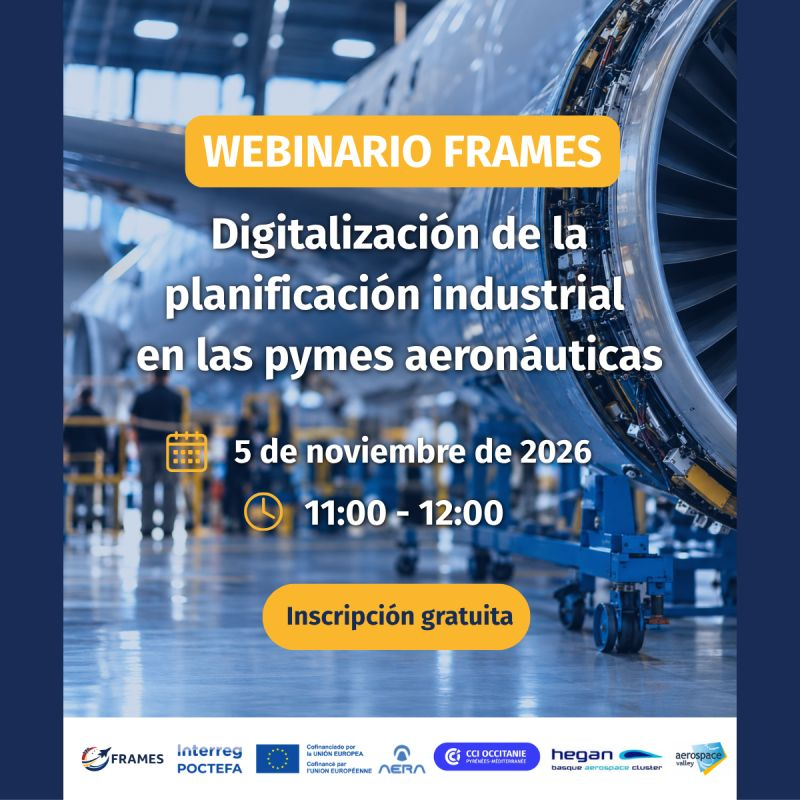
The European FRAMES project, led by AERA, will hold its first webinar on 5 November 2026, from 11:00 to 12:00, focusing on digital technologies for production planning and management in SMEs across the aeronautics, space and defence (ASD) sectors.
The session will explore how digitalisation can help optimise industrial processes, improve production planning and strengthen the competitiveness of companies across the sector.
The webinar will present a range of digital solutions for industrial planning and management, including MRP, ERP, APS and MES systems, as well as cloud-based technologies, the Internet of Things (IoT) and artificial intelligence (AI).
The webinar will also focus on emerging technologies, such as digital twins and real-time data analytics. The session will include practical insights from a company in the aeronautics, space and defence (ASD) sector, as well as an overview of the technologies expected to play a significant role in the coming years.
The webinar will be held in Spanish and French to facilitate the participation of companies from both sides of the border and encourage the exchange of knowledge and experience.
Registration
Participation is free of charge, but advance registration is required via the following link:
FRAMES is a European cross-border cooperation project led by AERA and implemented in partnership with HEGAN, Aerospace Valley and CCI Occitanie. Its aim is to strengthen the resilience and competitiveness of SMEs in the aerospace and defence sectors in Spain and France by promoting business cooperation, identifying industrial capabilities and encouraging the adoption of advanced technologies.
The project is co-funded at 65% by the European Union through the Interreg VI-A Spain-France-Andorra (POCTEFA 2021–2027) programme, which aims to strengthen economic and social integration across the border region between Spain, France and Andorra.
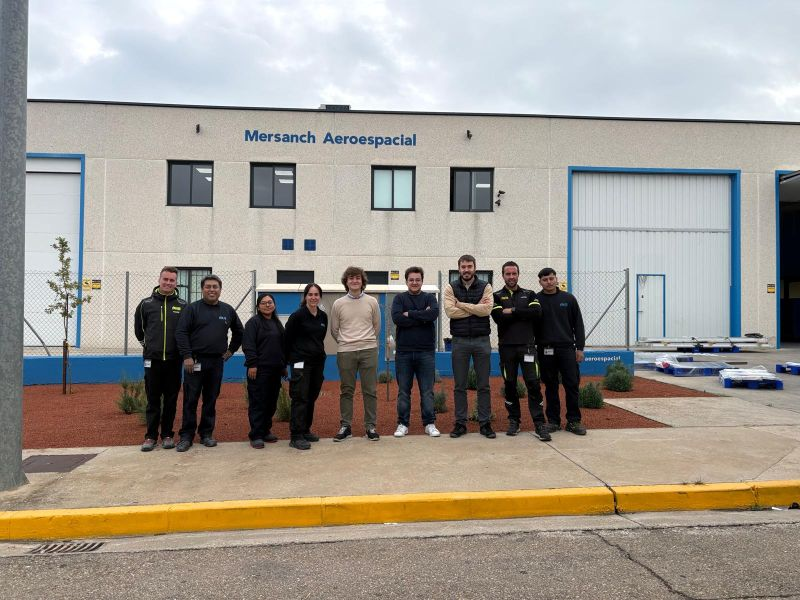
AERA visited Mersanch Aeroespacial’s facilities in Tarazona to gain first-hand insight into its industrial capabilities and processes, including cutting, polishing, drilling and maintenance, repair and overhaul (MRO), as well as its expertise in metrology and dimensional inspection.
The visit forms part of the European FRAMES project, led by AERA, which is developing a Cross-Border Industrial Capabilities Catalogue for the aeronautics, space and defence sectors in Spain and France.
This work will help raise the profile of companies across the region, make it easier to identify suppliers and industrial partners, and strengthen cooperation between the industrial ecosystems on both sides of the Pyrenees.
FRAMES is co-funded at 65% by the European Union through the Interreg VI-A Spain-France-Andorra (POCTEFA 2021–2027) programme.
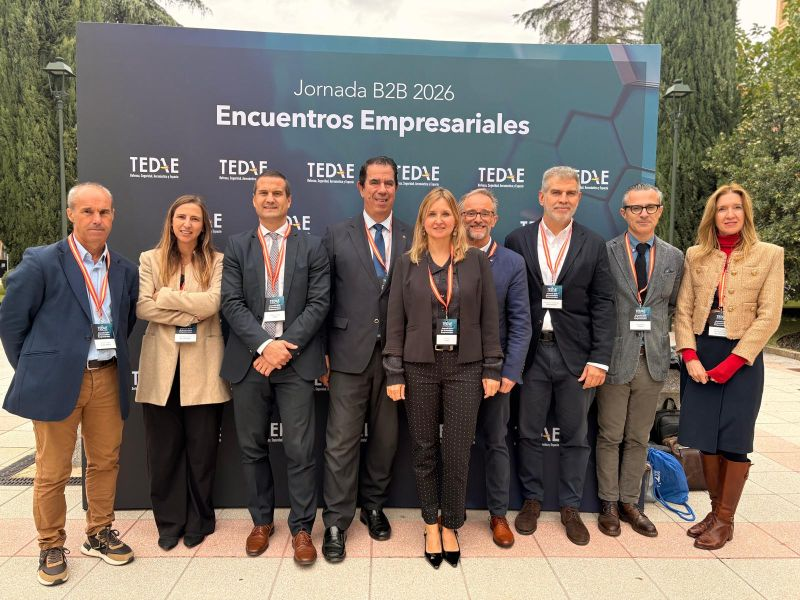
AERA took part on 20 October in TEDAE’s 4th B2B Business Meetings Conference, held in Madrid. The event brings together companies and institutions from the defence, security, aeronautics and space sectors to foster industrial cooperation and create new business opportunities.
This year’s Aragonese delegation included AERA members ALDEBARÁN SISTEMAS, UMEC, PRONIMETAL, ALOT METAL, Teruel Airport, EQUIMODAL and CMASA, together with the Aragón Defence Hub, helping to showcase Aragón’s industrial and technological capabilities.
The event featured panel discussions on open innovation and strategic partnerships to strengthen supply chains, with representatives from companies including Airbus, Indra Group, Navantia, GMV and Sener, among others.
In the afternoon, the B2B meetings gave participating companies the opportunity to present their capabilities, connect with potential customers and industrial partners, and identify new opportunities for collaboration.
Through this fourth participation, AERA continues to support its members’ competitiveness and market positioning by facilitating connections with major companies and promoting their integration into national value chains across the aeronautics, space and defence sectors.
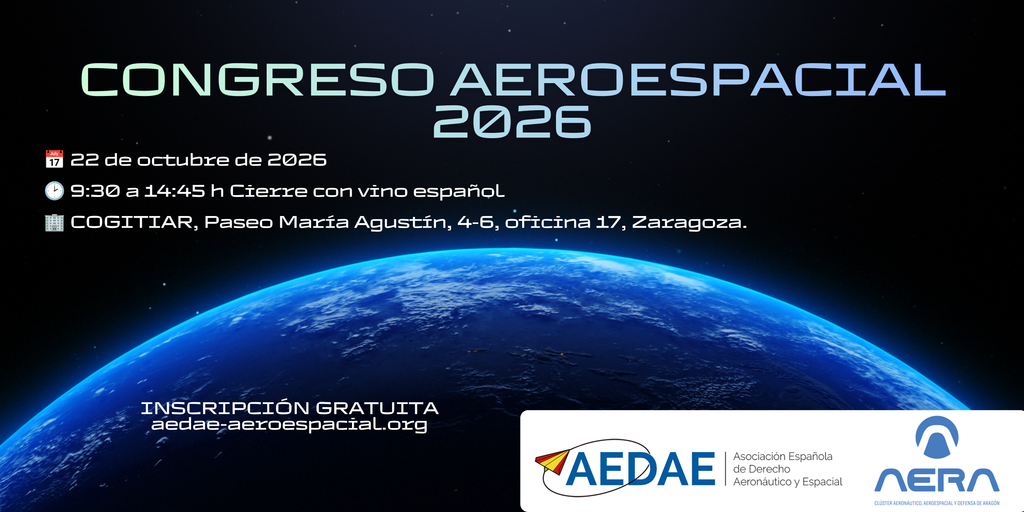
AERA, together with AEDAE (the Spanish Association of Aeronautical and Space Law), will host the next edition of the Aerospace Congress in Zaragoza on 22 October. The event will bring together companies, institutions, technology centres and industry professionals to address the main challenges and opportunities facing the aerospace and defence sectors.
The event will take place at COGITIAR (Zaragoza Association of Industrial Technical Engineers) and will provide a forum for the exchange of knowledge and experiences relating to innovation, industrial development, sustainability and new technological capabilities.
The conference will be organised into four panel discussions:
Panel 1. The aerospace industry and the circular economy.
Panel 2. Defence and the environment.
Panel 3. Airports and stratoports: management and sustainability.
Panel 4. Technology in Aragón: industry and new capabilities.
The programme will feature leading companies and organisations from the aerospace sector, including Aernnova, AITIIP, PLD Space, MAPFRE, HISDESAT, Teruel Airport, SCEYE, Elson Space, Equimodal and Integra, among others.
In addition, the event will feature a keynote lecture on space sustainability, with the expected participation of the Spanish Space Agency.
📅 22 October 2026
🕘 9:30 – 14:45 h
📍 COGITIAR, Paseo María Agustín, 4-6, oficina 17, Zaragoza.
AERA and Fundación Hidrógeno Aragón are carrying out the HIDROSIN-AR project, an initiative funded by the Aragonese Development Institute (IAF), which aims to identify the capabilities, needs and level of interest of Aragonese companies in relation to renewable hydrogen and synthetic fuels.
The project aims to analyse the potential of these technologies to contribute to the decarbonisation of strategic sectors in Aragón, with particular focus on industry, aerospace and dual-use technologies related to defence.
Through HIDROSIN-AR, the aim is to identify existing capabilities within Aragón’s business ecosystem, understand the needs and challenges faced by companies, and identify technological, collaborative and new project development opportunities in the region.
Take Part in the HIDROSIN-AR Survey
To support this analysis, AERA and Fundación Hidrógeno Aragón invite companies in Aragón to take part in the project survey.
If your company works with, has capabilities in, or is interested in renewable hydrogen, synthetic fuels or their industrial, aerospace or defence applications, your participation will help build a better understanding of Aragón’s business ecosystem and identify future opportunities for collaboration and innovation.
The information gathered will provide a more comprehensive overview of the capabilities and interests of companies in Aragón and help guide future initiatives and projects related to these technologies.
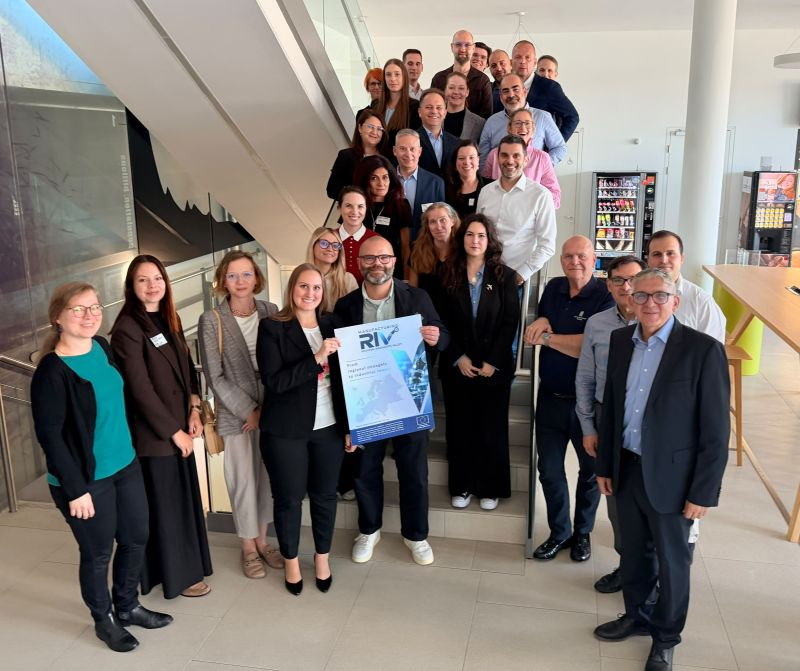
El pasado 28 de septiembre, AERA estuvo en Viena en la reunión de lanzamiento de Manufacturing RIV, un nuevo proyecto europeo en el que el clúster participa como socio y que se desarrollará durante los próximos cuatro años.
Nuestra compañera Patricia asistió al encuentro y presentó el clúster ante el resto del consorcio, compartiendo nuestra actividad, capacidades y experiencia dentro del ecosistema industrial y aeroespacial aragonés.
La reunión reunió a los socios del proyecto para poner en común la visión y los objetivos de Manufacturing RIV, definir la hoja de ruta y establecer las bases de la colaboración que se desarrollará durante los próximos años. Manufacturing RIV tiene como objetivo impulsar la transición hacia una industria manufacturera más digital, competitiva y sostenible, facilitando a las pymes y otros agentes del sector el acceso a soluciones tecnológicas innovadoras, espacios de datos de confianza y Pasaportes Digitales de Producto (DPP). AERA participará principalmente como dinamizador del ecosistema aeronáutico, aeroespacial y de defensa de Aragón, conectando empresas y otros agentes regionales con el resto del ecosistema europeo del proyecto.
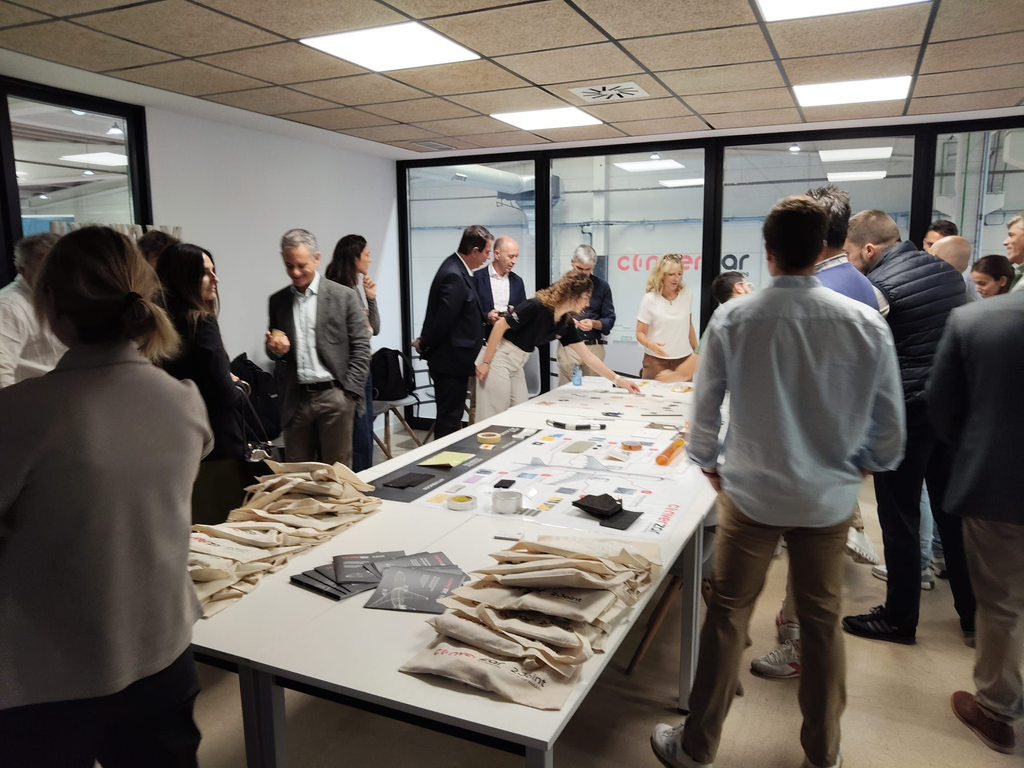
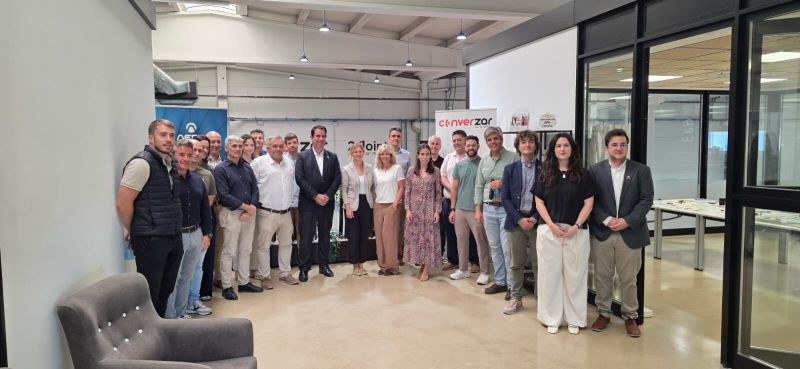
El pasado 21 de septiembre, AERA celebró un nuevo Café Espacial, en esta ocasión con una visita a CONVERZAR, empresa aragonesa especializada en la transformación de materiales adhesivos.
Durante el encuentro, los socios de AERA pudieron conocer de primera mano las capacidades de CONVERZAR y su experiencia de 50 años en la transformación de materiales adhesivos, así como las soluciones que desarrolla para responder a las necesidades específicas de diferentes procesos industriales.
La visita permitió conocer un proceso en el que la transformación de materiales va mucho más allá de la aplicación de un adhesivo. La empresa trabaja con capacidades de ingeniería, selección de materiales, laminación, corte, refrigeración, troquelado y transformación, desarrollando soluciones adaptadas a los requerimientos concretos de cada aplicación.
Los Cafés Espaciales de AERA tienen como objetivo acercar a los socios, dar a conocer las capacidades de las empresas que forman parte de la asociación y favorecer nuevas conexiones y oportunidades de colaboración dentro del ecosistema aeronáutico y aeroespacial aragonés.
Desde AERA agradecemos a todo el equipo de CONVERZAR su acogida, la visita a sus instalaciones y la oportunidad de conocer de cerca su actividad y capacidades. También agradecemos a nuestros socios su participación en este nuevo encuentro.